
Auto & Vehicle Insurance
Protect Your Car, Truck and Vehicle on Every Journey
Every Drive Comes With Uncertainty
Whether you're commuting to work, dropping your children off at school, or setting out on a weekend road trip, every journey carries some level of risk. Even the most careful drivers can't control distracted motorists, severe weather, road hazards, or unexpected mechanical failures. A single accident can result in expensive vehicle repairs, medical expenses, legal liability, and months of financial stress. Auto and vehicle insurance helps reduce those financial risks so you can get back on the road with greater confidence.
More Than Just a Legal Requirement
In many places, vehicle insurance is required by law before you can legally drive on public roads. But beyond meeting legal requirements, insurance helps protect one of your most valuable everyday assets.
Without adequate coverage, you could be responsible for paying thousands of dollars in repair costs, liability claims, or medical expenses after an accident.
What Can Auto Insurance Help Cover?
Depending on your policy, vehicle insurance may provide protection for:
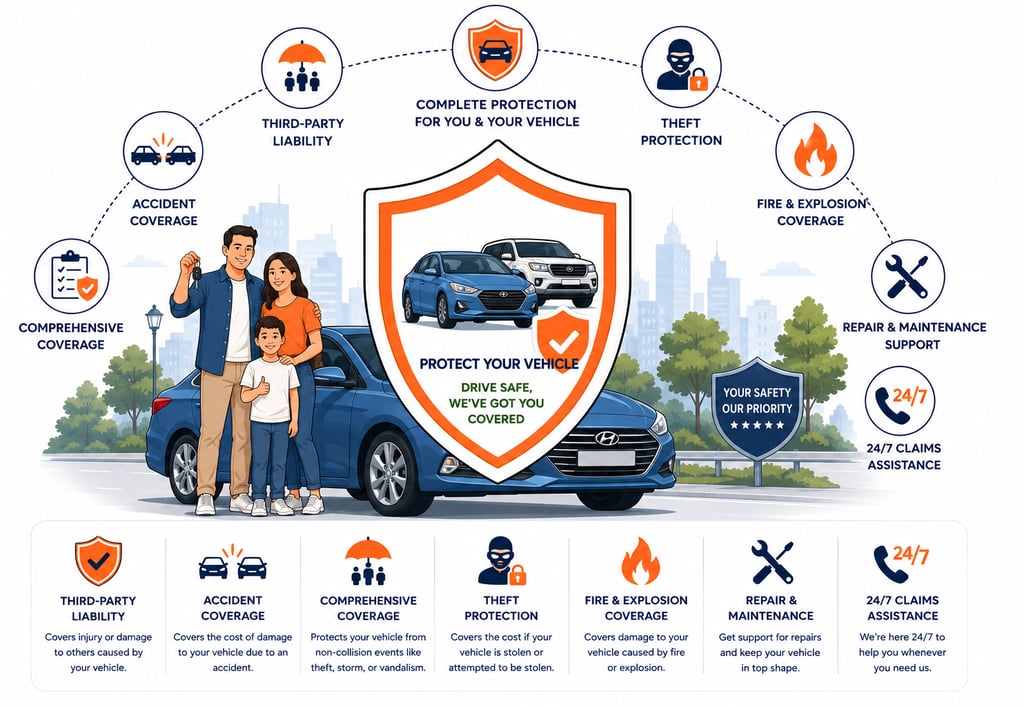
Damage to Your Vehicle
Repairs or replacement if your vehicle is damaged due to covered events.
Third-Party Liability
Costs if you're legally responsible for injuries or property damage caused to others.
Medical Expenses
Medical treatment for you or your passengers, depending on your policy and local regulations.
Theft
Compensation if your vehicle is stolen or damaged during an attempted theft.
Fire and Natural Disasters
Protection against covered events such as fire, hail, storms, flooding, or falling objects, depending on the policy.
Uninsured or Underinsured Drivers
Some policies help protect you if the other driver doesn't have enough insurance.
Different Types of Vehicle Insurance
Not every driver needs the same level of protection.
Liability Insurance
Covers damage or injuries you cause to others when you're legally responsible.
Comprehensive Insurance
Protects against non-collision events like theft, fire, vandalism, hail, or natural disasters.
Collision Insurance
Helps pay for repairs to your own vehicle after a collision, regardless of fault, subject to policy terms.
Third-Party, Fire and Theft
Provides liability coverage along with protection against fire and vehicle theft.
Full Coverage
A combination of different coverages designed to provide broader financial protection.
The exact definition of "full coverage" varies by insurer.
What Influences Your Insurance Premium?
Insurance companies evaluate risk before calculating premiums.
Common factors include:
Your age.
Driving experience.
Claims history.
Type and value of your vehicle.
Where you live.
Annual mileage.
Vehicle usage (personal or business).
Safety features.
Policy limits.
Deductible amount.
Each insurer uses its own underwriting criteria.
Smart Ways to Reduce Your Premium
You don't always have to pay more to get good protection.
You may qualify for savings by:
Maintaining a clean driving record.
Choosing a higher deductible.
Installing anti-theft devices.
Driving fewer miles each year.
Bundling multiple insurance policies.
Completing defensive driving courses where recognized.
Comparing quotes from multiple insurers.
Always balance affordability with adequate coverage.
What to Do After a Vehicle Accident
The moments after an accident can be stressful. Having a plan helps.
Check for injuries and call emergency services if needed.
Move to a safe location when possible.
Exchange information with the other driver.
Take photographs of the vehicles and surrounding area.
Collect witness information if available.
Notify your insurer as soon as practical.
Follow your insurer's claim instructions.
Avoid admitting fault at the scene, as liability is determined through the claims process and applicable laws.
Common Exclusions You Should Know
Auto insurance doesn't cover every situation.
Policies often exclude or limit coverage for:
Intentional damage.
Racing or illegal activities.
Normal wear and tear.
Mechanical breakdowns unrelated to covered events.
Driving without a valid license.
Using the vehicle outside the policy's stated purpose.
Damage exceeding policy limits.
Review your policy carefully for specific exclusions.
Mistakes Drivers Often Make
Many claims problems begin before an accident happens.
Avoid these common mistakes:
Buying coverage based only on the lowest premium.
Underinsuring your vehicle.
Forgetting to update your policy after modifications.
Not understanding your deductible.
Waiting too long to report an accident.
Assuming every driver on your policy is automatically covered.
Understanding your policy before an accident occurs can prevent costly surprises later.
Before You Renew Your Policy
Don't let your policy renew automatically without reviewing it.
Ask yourself:
Has my vehicle's value changed?
Have I moved to a new location?
Am I driving more or less than before?
Do I qualify for new discounts?
Is my deductible still appropriate?
Have my insurance needs changed?
An annual review helps ensure your coverage remains suitable.
The Bottom Line
Owning a vehicle brings freedom and convenience, but it also comes with financial responsibility. Auto and vehicle insurance provides a safety net when accidents, theft, or unexpected events disrupt your plans. Rather than choosing a policy based solely on price, take time to compare coverage options, understand exclusions, and select protection that matches how and where you drive. A well-informed decision today can save significant time, money, and stress in the future.