
Travel Insurance
Protect Your Trip, Health and Belongings Abroad
The Best Trips Are the Ones You Never Have to Worry About
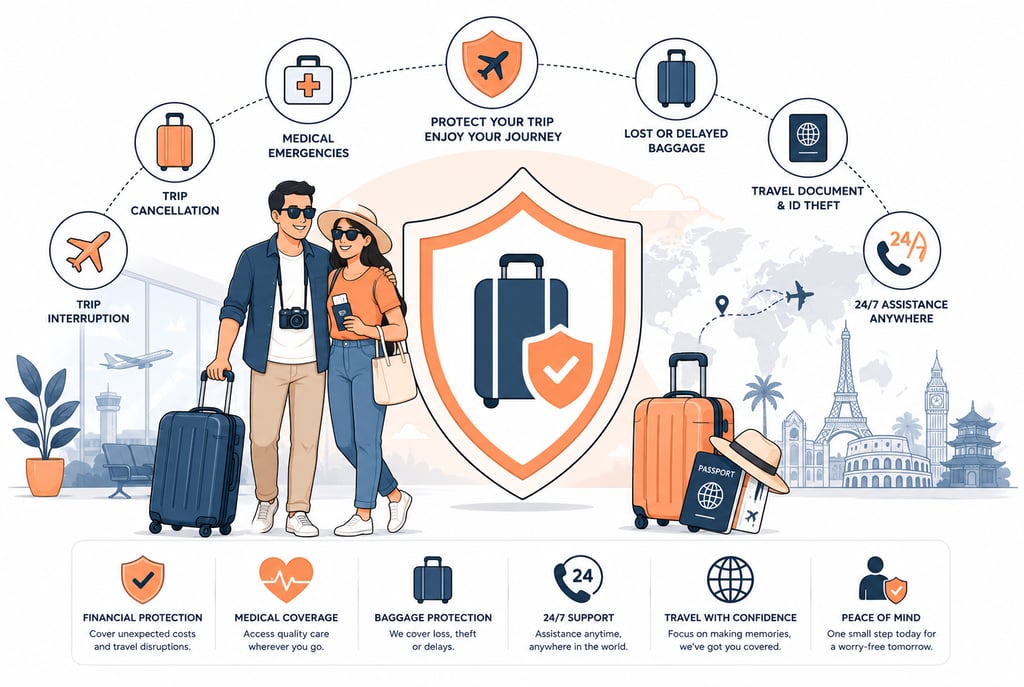
Planning a trip is exciting. Whether you're traveling for a family vacation, a business meeting, studying abroad, or exploring a new country, you probably spend weeks arranging flights, hotels, and itineraries. But even the most carefully planned journey can be disrupted by an unexpected illness, a cancelled flight, lost luggage, or a medical emergency far from home. Travel insurance doesn't prevent these situations from happening—it helps reduce their financial impact so you can focus on enjoying your trip instead of dealing with unexpected expenses.
Why Travelers Choose Insurance Before They Depart
Many travelers think insurance is only necessary for international trips or expensive vacations. In reality, unexpected events can happen anywhere. Medical treatment abroad can be costly, airlines sometimes lose baggage, severe weather may interrupt travel plans, and emergencies at home can force you to cancel a trip at the last minute.
Travel insurance offers financial protection against many of these uncertainties, allowing you to travel with greater confidence.
What Does Travel Insurance Usually Cover?
Coverage varies by insurer and policy, but many travel insurance plans may include:
Emergency Medical Treatment
Helps pay eligible medical expenses if you become ill or injured during your trip.
Emergency Medical Evacuation
Provides assistance when transportation to an appropriate medical facility is medically necessary.
Trip Cancellation
May reimburse eligible prepaid, non-refundable travel expenses if your trip is cancelled for a covered reason.
Trip Interruption
Helps recover certain costs if you need to cut your trip short due to a covered event.
Lost, Stolen, or Damaged Baggage
Provides compensation within policy limits for eligible personal belongings.
Travel Delays
May reimburse additional accommodation, meals, or transportation expenses caused by covered delays.
Personal Liability
Some policies include limited protection if you're legally responsible for accidental injury or property damage during your trip.
One Policy Doesn't Fit Every Traveler
Different travelers have different needs.
Single-Trip Insurance
Designed for one specific journey and ends when the trip is complete.
Annual Multi-Trip Insurance
Suitable for people who travel several times a year.
Family Travel Insurance
Covers multiple family members under one policy, subject to policy terms.
Student Travel Insurance
Designed for students studying abroad, often including benefits tailored to longer stays.
Business Travel Insurance
Provides protection for professionals traveling for work, including coverage for business equipment under certain policies.
Before You Buy a Policy
Choosing travel insurance isn't just about comparing prices.
Consider:
Your destination.
Length of your trip.
Planned activities.
Your age and health.
Existing medical conditions.
Total trip cost.
Coverage limits.
Emergency assistance services.
Policy exclusions.
A policy that's ideal for a beach holiday may not be suitable for a skiing trip or adventure travel.
Adventure Comes With Extra Risk
If your itinerary includes activities such as:
Skiing
Scuba diving
Mountain climbing
Skydiving
Motorcycling
Trekking at high altitude
check whether your policy covers these activities. Many insurers require optional adventure sports coverage.
What Travel Insurance May Not Cover
Policies differ, but common exclusions often include:
Undisclosed pre-existing medical conditions.
Traveling against government travel advisories, where applicable.
Alcohol- or drug-related incidents.
High-risk activities not covered by the policy.
Lost belongings left unattended.
Fraudulent claims.
Costs exceeding policy limits.
Reading the policy wording before departure helps avoid unexpected surprises.
What Should You Do If Something Goes Wrong?
If you experience an emergency while traveling:
Contact emergency services if necessary.
Notify your travel insurer or emergency assistance provider as soon as possible.
Keep receipts for eligible expenses.
Obtain medical reports or police reports if required.
Take photographs when appropriate.
Complete claim forms accurately.
Submit supporting documents within the required timeframe.
Good documentation can make the claims process much smoother.
Common Myths About Travel Insurance
"Nothing ever happens on my trips."
Many claims involve routine issues like delayed baggage, cancelled flights, or minor illnesses—not major disasters.
"My credit card covers everything."
Some credit cards include travel benefits, but coverage limits and exclusions vary significantly.
"Travel insurance is only for international travel."
Domestic travelers may also benefit from protection against trip cancellations, delays, and lost baggage.
Smart Travelers Do These Things
Experienced travelers often:
Purchase insurance soon after booking.
Carry digital and printed copies of their policy.
Save emergency assistance contact numbers.
Understand their policy before departure.
Declare relevant medical conditions honestly.
Keep important travel documents secure.
Preparation can save valuable time during an emergency.
The Bottom Line
Travel is about discovering new places, meeting new people, and creating unforgettable memories, not worrying about unexpected expenses. While no one expects a medical emergency, cancelled flight, or lost suitcase, these situations can happen to even the most experienced travelers. Travel insurance helps reduce financial uncertainty so you can spend less time worrying about what might go wrong and more time enjoying the journey ahead.